


Mild spoilers ahead: I name episodes and a few key moments across three seasons. Consider this your warning.
I first heard about The Bear from one of our regulars. She came in with the recommendation like she was handing over a secret: have you heard about The Bear? I’m sure you’ll like it. I hadn’t. I didn’t even have Disney+ to watch it. I’ve thanked her many times since.
She was right from the start. I got hooked from the first episode, and I also felt the tension. My fiancé, who’s been in the industry for fifteen years, couldn’t watch it at all. The yelling from the kitchen, the rhythm of a takeaway sandwich shop, the orders arriving, the voices, the chaos. It was all so accurate that it just made him think about work, and he never got to the second level of the show.
I did. And the second level is where I live: brand designer, and co-owner of a hospitality business.
Because it’s much deeper than a series about a sandwich shop turning into a fine dining restaurant. It’s about the highs and lows of a family business, the struggle and the joy of owning a hospitality venue, the beauty of teamwork, and the loneliness that sits on a chef’s shoulders. The quiet days and the busy ones you can’t control.
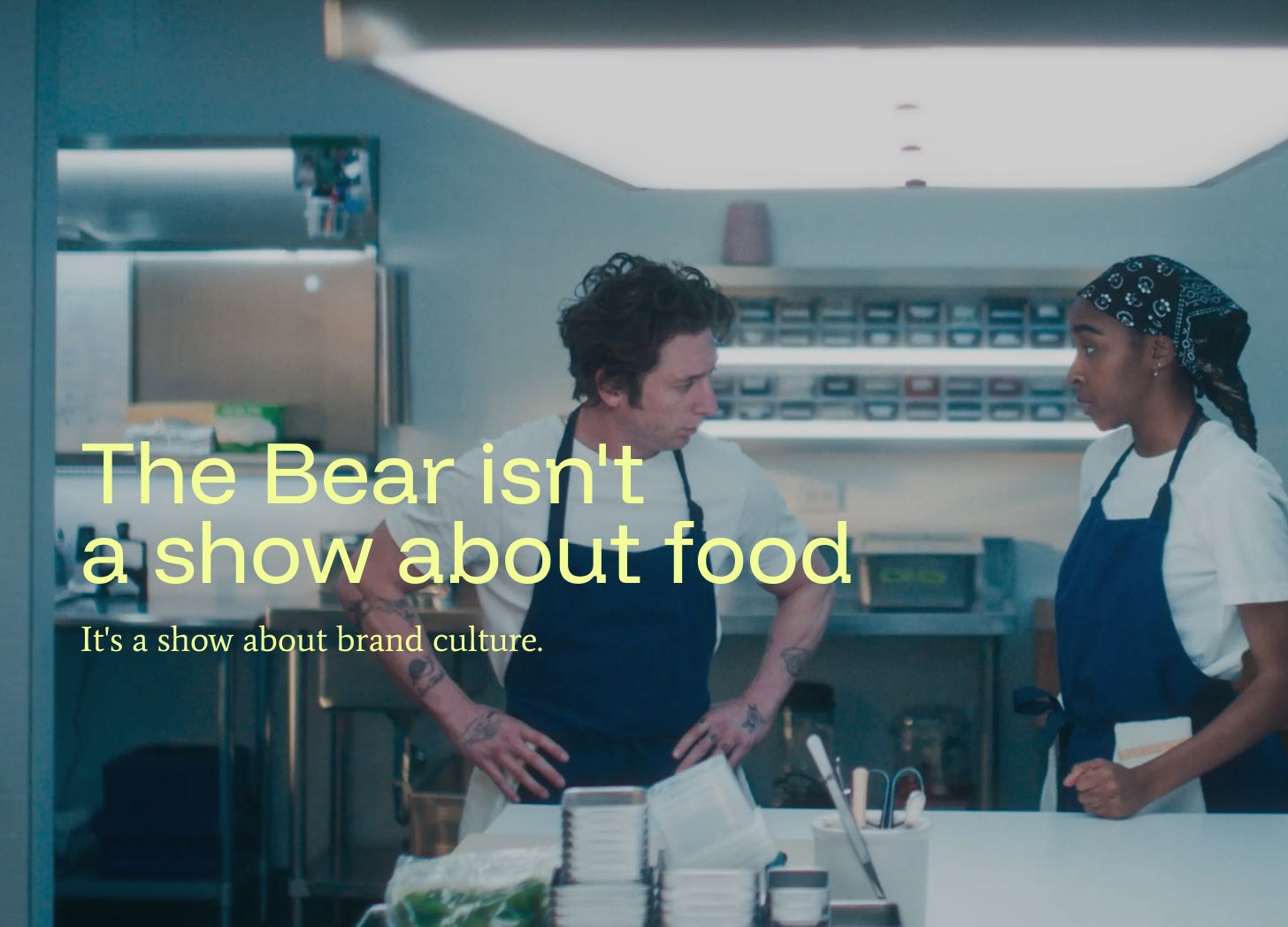
The Bear isn’t a show about food. It’s a show about brand culture.
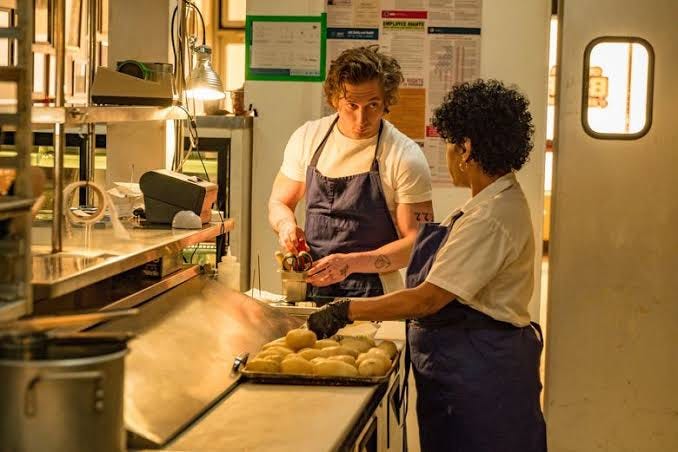
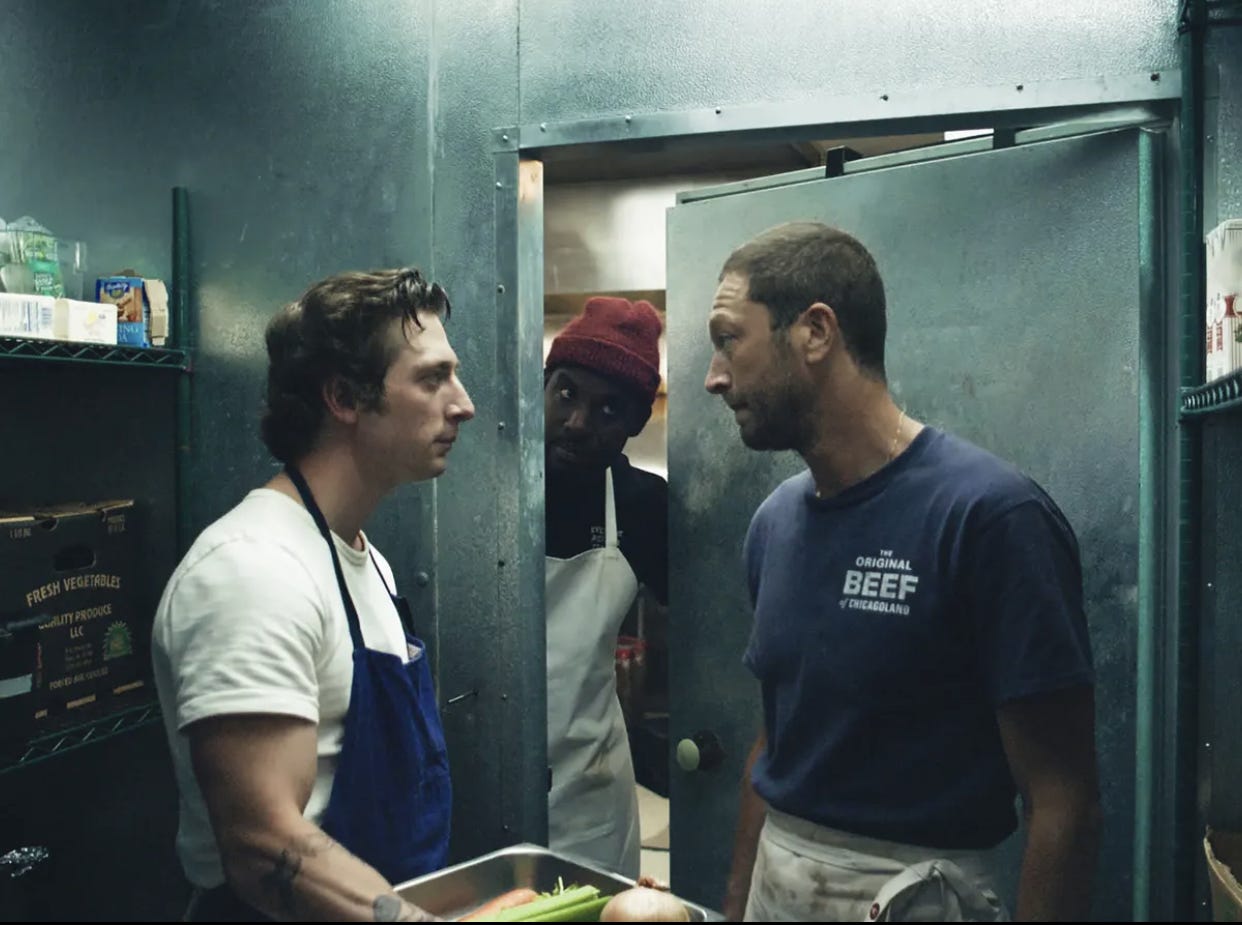
For those who haven’t seen it: Carmy is a young fine dining chef, trained in the best kitchens in the world, who comes home to Chicago to take over his late brother’s sandwich shop. The Original Beef of Chicagoland is loud, broke, and falling apart, and it comes with a staff who have no interest in being fixed, starting with Richie, his brother’s best friend, who behaves like he owns the place. Carmy brings in Sydney, a young chef with real ambition and a soft spot for the Beef, and together they try to turn a sandwich window into something else entirely.
So what is brand culture, really? It’s the invisible part of a business: the part that tells people who you are without shouting it. It sits underneath everything: the people, the product, the space, the design. It’s your beliefs and your behaviour, inside the business as much as in front of the customer.
This is the part of my job I love most, and the part that humbles me. Brand strategy is exactly this work: sitting with a team, pulling out what they actually believe, and putting words to it. But a strategy is only ever a description. I’ve written beautiful ones for people who never lived a line of them, and I’ve walked into venues with no strategy at all where the culture is so clear you can feel it from the door. Design can express a culture. It can’t invent one. And it’s also the one part of a brand you can’t borrow. You can copy someone’s colour palette, their font, even their menu. You can’t copy what a team does with a mistake, whether they hide it, or fix it in front of you.
The Bear is a show about a man who inherits a culture he didn’t build, and then tries to replace it with one he writes down.
01. The family business
Mikey’s Beef ran on loyalty, chaos, and nobody having a job title. That’s not a criticism. That’s a very specific culture, and it worked for years. People came for a sandwich and stayed because of how it felt. Nobody wrote it down, nobody defined it, nobody looked at it from the outside. It just happened, the way it does in a family business built on love and habit.
Then Carmy walks in and inherits two things: a business, and a culture. Only one of those can be restructured.
The clearest proof of what that culture actually was comes much later, in the episode Napkins, when we finally see how Tina got hired. She’s been job hunting for months, humiliated, at her lowest, and Mikey sits her down and feeds her. No interview. No process. That’s the founding story of the brand, and it was never written on a wall or a website. It just happened, once, between two people, and it shaped how that kitchen treated everyone who came after.
That’s the part I keep thinking about as a business owner. Your culture is being set right now, by whatever you did last Tuesday, whether you meant to or not.
02. Voice
The first thing Carmy actually changes isn’t the menu or the room. It’s the language.
“Yes, chef.” “Corner.” “Behind.” “Heard.” It sounds like theatre if you’ve never worked in a kitchen, but it’s a system. A shared vocabulary that lets fifteen people move around each other with knives and hot pans and behave like one organism. The Beef speaks in shouting and nicknames. The Bear speaks in protocol. Same people, same room, completely different brand.
This is where most hospitality brands get it backwards. We write our tone of voice guidelines for the customer: the Instagram captions, the menu descriptions, the little sign on the door. Almost nobody writes one for the team. But the way your staff speak to each other is the voice that customers actually hear, and it’s audible from every table in the room.
We wrote a tone of voice for our own business, and it ended up sounding exactly like us. English isn’t our first language, so it came out with our accents in it, our wrong words, the phrases we say because we’ve never known the right ones. I could have cleaned it up. I didn’t. Those mistakes are the personality now, and no competitor could copy them if they tried.
03. The non-negotiables
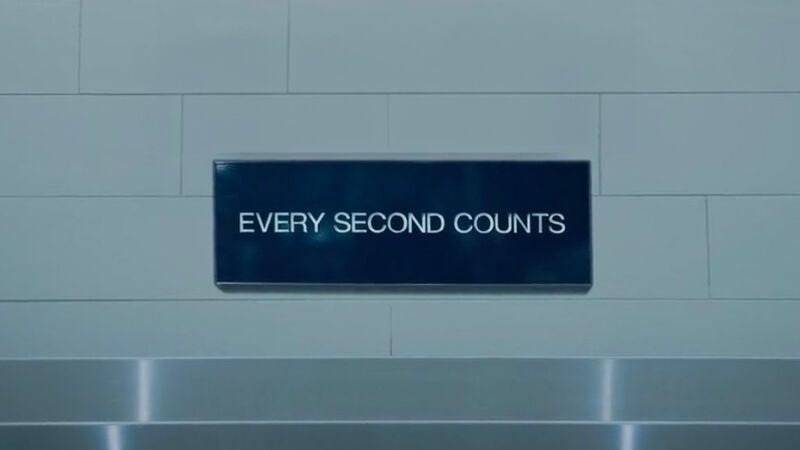
In the episode Tomorrow, Carmy writes his list. Non-negotiables. Everything he believes a restaurant should be, borrowed from every kitchen that formed him. It’s genuinely beautiful. If a client handed me that document I’d be thrilled.
In the episode Children, it’s bankrupting the restaurant.
The menu changes every day. The standards don’t bend. The costs don’t stop. And you watch a team try to live inside a document that was written by one person, at night, for reasons that were mostly personal. A brand standard nobody can afford to run isn’t a standard. It’s a wish list with a nice font.
This is the part operators feel in their chest. Values are cheap to write and expensive to keep, and the gap between the two is where good businesses quietly break.
04. Uniform
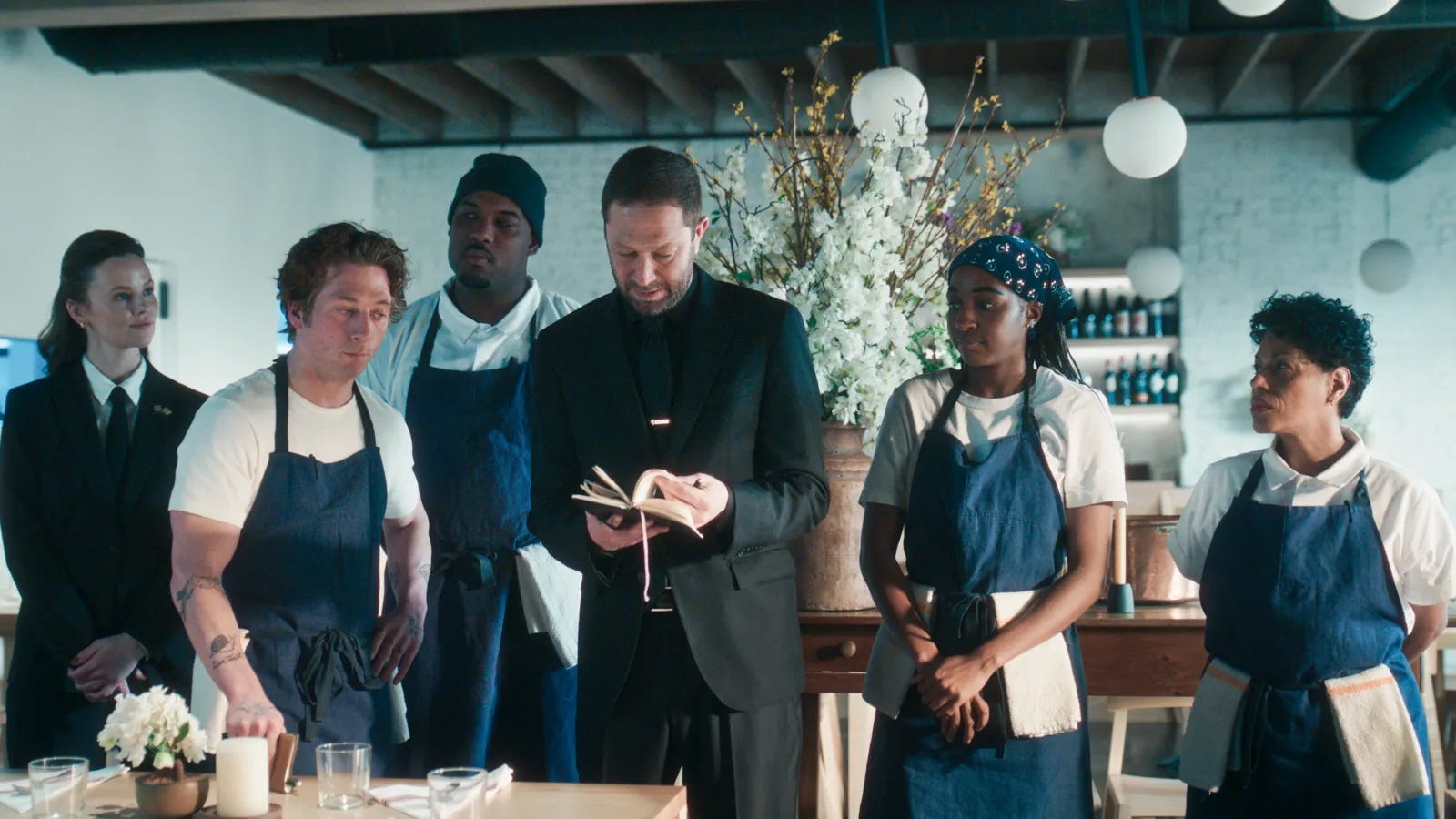
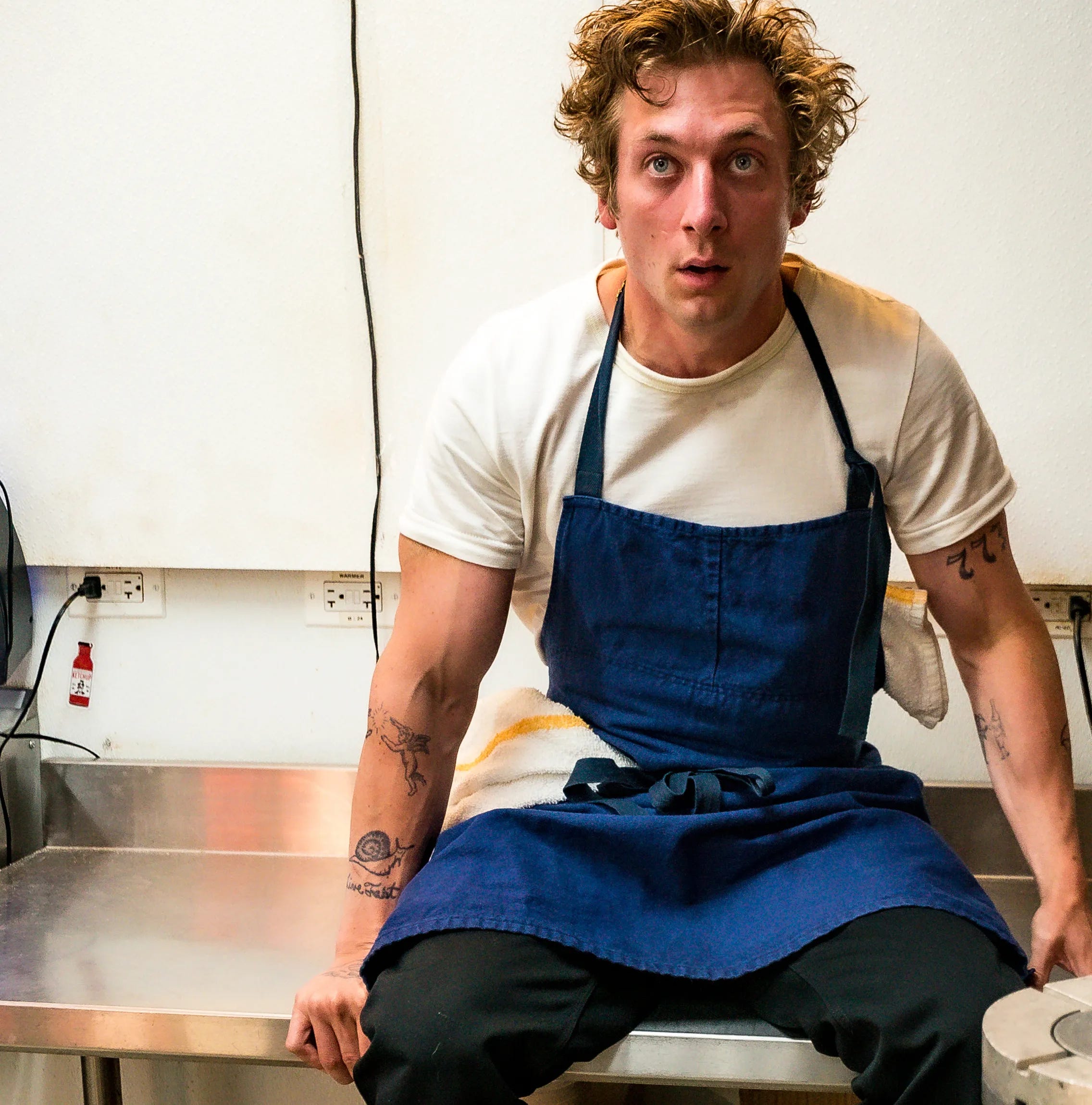
The white tee. The blue apron. The tattoos. ( you know the Carmy look right?)
Uniform is where an internal culture becomes visible to a guest. It’s the first piece of your brand that walks up to the table/counter. And what The Bear did with it was accidental and enormous: a costume department dressed a fictional chef, and the whole industry started dressing like him. Denim aprons everywhere. That’s identity travelling through clothing, faster and further than any logo has ever travelled.
It works because the clothes were true first. Carmy dresses like someone who has been in a kitchen since he was nineteen, not like someone performing a chef. You can feel the difference, and so can a customer, which is why the “restaurant uniform” that comes from a stylist rarely lands the same way.
05. The name, and the logo
Here’s what I love most, as a designer: the logo arrives last.
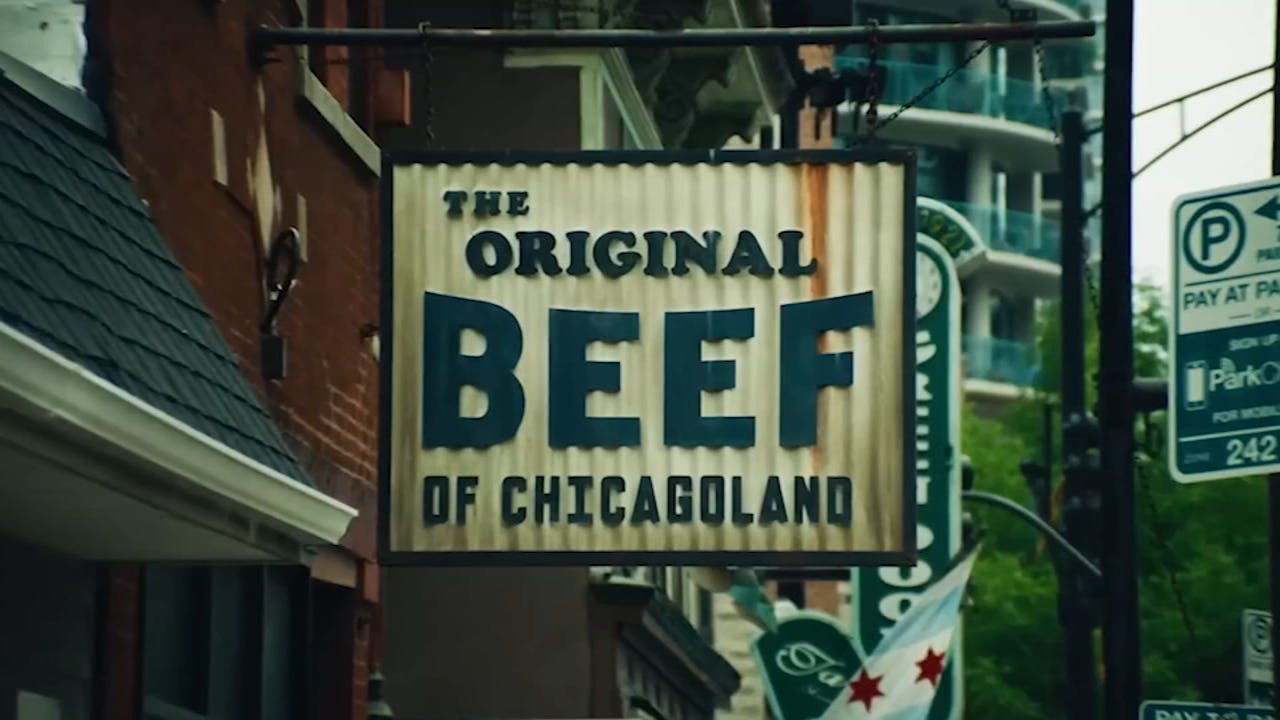
The name comes from inside the family. The Bear was Mikey’s nickname for Carmy. Not a naming workshop, not a shortlist, not a mood board. It’s inherited, personal, and honestly a bit illegible to anyone outside that family, which is either the best or worst kind of brand name depending who you ask. I’d argue the best. It could only ever belong to them.
And the mark itself only shows up once the culture has already been rebuilt, after the language, after the values, after the team learned how to work in a new way. Which is the right order, and almost never the order it happens in real life. Most rebrands start with the logo because the logo is the thing you can approve in a meeting.
A logo is a summary of a culture that already exists. If the culture isn’t there, it’s just a promise nobody is keeping.
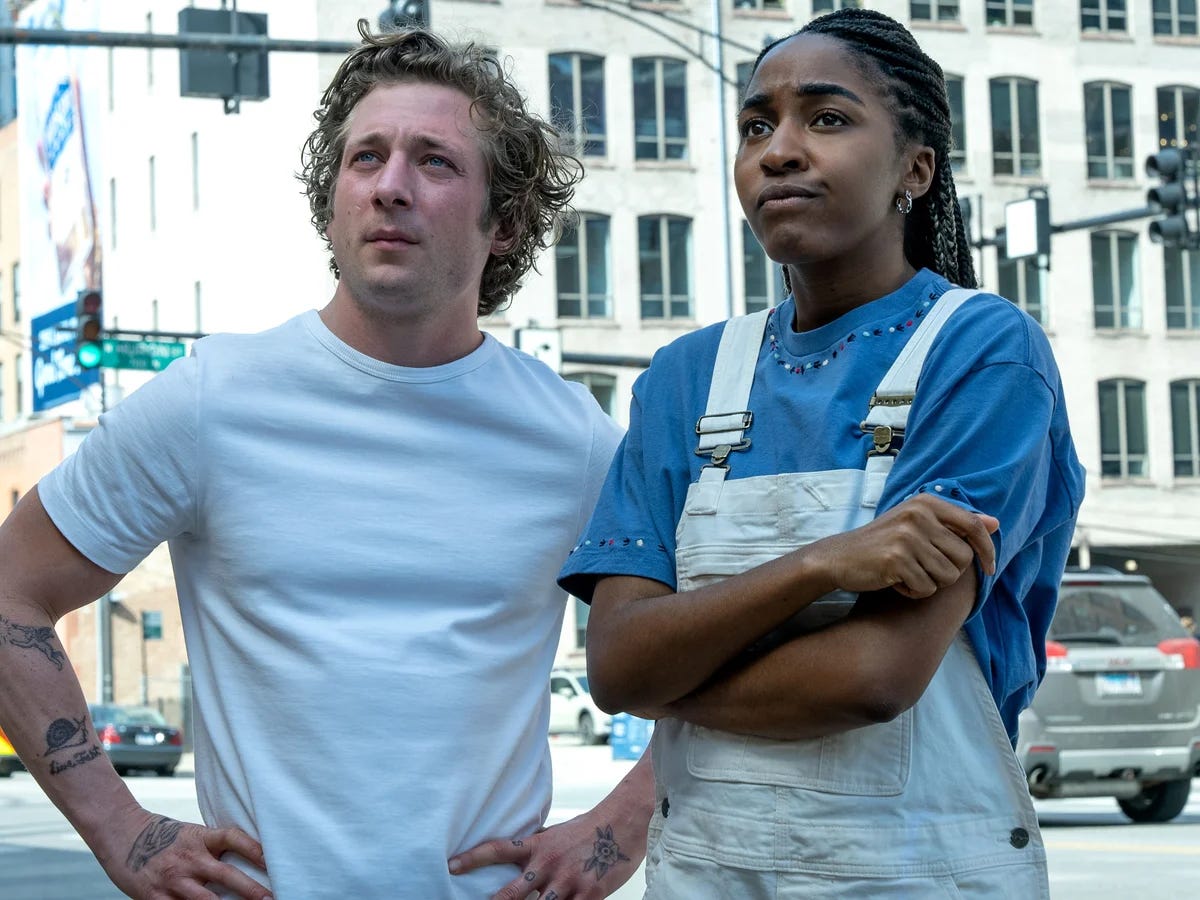
There’s a whole other piece to write about how the show looks. The colour grading shifting as the restaurant changes, the overhead shots of the food, the plating, the way the Beef is brown and warm and The Bear is cold and blue. I’ll come back to that another day.
But the thing I keep returning to is smaller. Our regular came back and I told her I’d finally watched it. She laughed and said she knew I would.
That’s the whole thing, really. She wasn’t recommending a show about restaurants. She was recommending a show she thought I’d recognise myself in, because she’d spent enough time in our patisserie to know what we care about. Nobody designed that. We never wrote it down. She just read it off the room.
A logo you can approve in a meeting. This, you can only build.
À bientôt,
Mary